In the Summer of 2010 I shall be going to Uganda as a research volunteer on the Semliki Chimpanzee Project. I will spend ten weeks following and studying the chimpanzees of Semliki Wildlife Reserve, learning the ropes as a fledgling chimpanzee chaser. This blog will chart the memorable animals, people and events that I encounter along the way and my experiences with the stars of the trip, the Semliki chimpanzees.

Wednesday, 15 September 2010

Dawn chorus

After an absence of several days the chimpanzee re-appeared with considerable commotion yesterday evening, much to my delight, as I had feared that I may go my final week here without a sighting of my fascinating study subjects.

The evening of the chimpanzees’ return proved to be a very exciting one, as it was a large group that was spotted close to camp and it appeared to signal the fusion of many previously isolated fractions. Reunions between chimpanzees are typically eventful and often violent, as old dominance relationships are forcibly re-established and that evening was no exception.

A crescendo of screams and hoots emerged from the forest as the fractions reunited, prompting me to hurriedly return to the trails that I have scoured with no success earlier that day. It was definitely worth putting back on damp socks and mud-caked clothing and returning to the forest, as the few hours that I thus gained with the chimpanzees proved to be truly exhilarating.

I had not previously seen the chimpanzees so numerous or so animated, and so it was with wide eyes and a racing pulse that I watched them career through the branches overhead – chasing after each other, aggressively displaying and screaming wildly.

The hysteria gradually died down as darkness descended, and before long the chimpanzees began searching for suitable spots to make a nest for the night. It was the closest I had yet been able to observe the evening bed-making ritual and so I watched fascinated as several chimpanzees constructed their leafy nests above me. I felt hugely grateful to be able to be a spectator to such interesting behaviour, even if it did mean being ravaged by the swarms of bloodthirsty mosquitoes that emerged with the arrival of dusk.

Knowledge of the nest locations for the chimpanzee group meant an especially early start this morning, as we hoped to be stationed close to the nests well before the chimpanzees began to rise.

After a 5:30am alarm call and a hurried breakfast we headed into the eerie darkness of the forest and inched along slowly and carefully along the trail by torchlight – taking in the decidedly different noises and atmosphere of the pre-sunrise forest. We soon came to the nesting site and settled down to take notes on the vocalisations beginning to emanate from the scattered beds.

As the rays of the rising sun proceeded to trickle through the canopy several dark figures slowly arose from their slumber and rolled out of their nests to sit silhouetted against the rapidly-brightening sky on nearby branches. As the chimpanzees awoke it seemed that the excitement of the previous day’s reunion started afresh and a dawn chorus of excited hoots and screams began.

Sadly we were not able to spend long with these chimpanzees today, as the arrival of a collection of noisy tourists caused the group to fragment and hurriedly scatter in many directions and our attempts to relocated its members were ultimately in vain.

However, disappointing as the untimely loss of our chimpanzee subjects may have been, I would definitely consider the effort of prising myself from my warm bed so early this morning worth it, especially as it may well my last chimpanzee encounter of the trip. Being able to sit and watch the chimpanzees above me as they emerged from their leafy beds and rose to face the new day was a wonderful experience and certainly worth leaving my own bed half an hour earlier for!


Written on Friday 10th September

Animal of the week - week 10

Black-headed weaver (Ploceus cucullatus)

Weaver birds get their name from the fascinating behaviour that they display in the breeding season. In order to attract a mate, the male birds each painstakingly construct an impressively elaborate nest of interwoven grass, with the females surveying these nests before choosing the males whose nest exhibit the best location and craftsmanship to father their offspring.

When I arrived her in Semliki a prominent feature of the camp was the lone tree with the dry and decaying weaver nests of the previous breeding season hanging upon it like bizarre baubles. Over two months on these old nests have been ripped from the branches by male weaver birds who have returned once more to compete for the attention of the females with their nest-building efforts.

I watched with great interest as the returning males tore at their previous creations in order to make way for new nests and as they noisily competed for ownership of the best nest sites.
With territories among the branches now established the male birds can be seen from my veranda each day busily collecting the strip of grass that they will steadily amass and weave with great skill to produce the nests. It is amazing the level of dedication that goes into the males’ attempts to secure their ultimate goal – the opportunity to reproduce.

Observing the initial stages of the weavers’ nest –building process draws my thoughts to the intricately interwoven weaver bird nest that sits upon a shelf in my room at home – a much prized souvenir from a trip to Rwanda several years ago.

Whilst I am sure that the feeling experienced when gazing upon the elaborate creations of the weavers and watching their construction against the backdrop of the Rwenzoris shall not be matched by the sight of my lone nest at home, I feel I shall soon be ready to return to my much-loved room and its shelf of travelling mementos and leave the industrious weavers behind. I will be very sad to leave Semliki this Tuesday, but part of me is eager to return to family and friends with my collection of stories and snapshots in tow, and even a couple of additions for my shelf of treasures from my travels.

I have much enjoyed the way that the nest-laden tree and the activity of the weaver birds has altered as I have progressed through my time here, and the endeavours of the brightly coloured birds will be one of the many incredible memories I return home with.

I only hope that one day in the not-too-distant future I shall return to Semliki and that once again the intriguing behaviour of the black-headed weavers, my final ‘animal of the week’, will chart my time in this incredible place.

Wednesday, 8 September 2010

A treetop treat

With the David, the American student here, conducting research focusing on chimpanzee nests, he employs climbing equipment in order to reach, measure and collect these. Ever since he arrived with his ropes, harness and karabiners in tow I have been desperate to have a go ascending into the treetops and today I got my chance.

I recently stumbled across a cluster of 25 fresh chimpanzee nests in my search for the chimpanzees – a number far greater than previously found at one site here in Semliki. With this unusually high density of nests being discovered David was keen to visit the area for himself to investigate and he kindly offered to take me along with him and let me have a go with his climbing gear whilst we were there.

Always keen for the chance to climb, and intrigued to see a chimpanzee nest up close, I was bubbling with excitement as I watched David set up his equipment and himself ascend into the tree above me, and was itching for my turn to come.

Before long David descended back to the ground with a nest in tow and handed the ropes and harness into my eagerly awaiting hands before giving me a quick tutorial in the art of clog ascending – the method he uses to climb.

Clog ascending involves attaching a set of grips to the ropes and then fixing one of these to a foot and the grasping the remaining two, one in each hand. The grips allow movement upwards but not downwards and so you slide your foot and then arms up the rope in alternation to progress upwards.

Hauling your body weight up the rope is fairly exhausting work and getting the hand of the required movement takes a while. It was therefore relatively slow progress as I ascended the first few metres – inching up the rope like a caterpillar crawling up a silken thread. However I soon got to grips with the technique and my progress sped up considerably, before being slowed once more by the increasing burn in my upper arms.

After around 25 feet or so of effort I reached a crook in the tree I was suspended alongside and clambered into it to enjoy the view and revel in having made it to the treetops on my first clog ascending attempt.

After a brief respite to let the burning ache in my arms subside I was free to explore the canopy and so clambered and swung between the branches for several minutes before deciding to climb higher to get a closer view of the chimpanzee nest above me.

After scrambling another 8 feet or so up the increasingly swaying tree trunk, fighting off a stream of biting ants in the process, I got my first in situ view of the tangle of crushed leaves and broken branches that is a chimpanzee nest. It was brilliant to be able to see the leafy bed that a chimpanzee will make afresh each night from the point of view of its constructor and to think that the chimpanzee owner would have been peacefully sleeping in the same nest not so long ago.

Having explored the upper branches and seen the nearby nest I decided after about half an hour that I had had my fill of canopy clambering for the day and so made ready to return to the forest floor. After a much easier and more rapid descent I once again planted my feet safely on solid ground with a big grin stretched across my face and having thoroughly enjoyed my first clog ascending experience.


Written on Monday 6th September

Done with data

The last couple of days here have been pretty manic. In a final bid to complete my data collection this week and avoid a last minute panic I have spent nearly 20 hours in the forest juggling chimpanzee tracking duties and my own research. However, the effort was definitely worth it as I am pleased and relieved to announce that as of earlier this evening I have finished with the data collecting aspect of my project.

It certainly hasn’t been plain sailing – there has been bureaucracy, a misbehaving GPS, abnormally high rainfall and a distinct lack of wells to deal with among other things. Somehow though I have managed to collect a volume of data that I am satisfied with and can state with some pride that I have officially completed my first ever stint of self-led field research.

With the data in, all that remains for me to do is to analyse it and produce my write-up when I return to the UK. Whilst I am anxious about whether or not all will go smoothly when I return home with my data I realise there is nothing I can do about that right now and so I shall put my worries aside and focus on enjoying the little time I have left here to the full with the weight of my research temporarily lifted from my shoulders.

Besides, whilst I really want my project to be a success, and would love for it to win the praise of my academic supervisors, I can see that no matter what the outcome of my research, this trip will have been a truly incredible experience and will have taught me a lot about what it takes to carry out research in the field and to chase chimpanzees. With that in mind I shall now carefully pack my well-used research notebooks away and concentrate on enjoying my remaining days with the Semliki chimpanzees.


Written on Friday 3rd September

Sketching under the evening sun

My tent here sits upon a raised wooden platform and the area outside it forms a veranda area with a fantastic view over the forest. The spot is bathed each evening in the rich golden glow of the slowly setting sun and is a wonderful place to relax when the afternoon’s tasks have been completed.

I often sit and read in this sun-drenched spot until the dimming light and swarming insects force me inside. I also find it a perfect place to put the small art set my mum gave me to take out here to good use and indulge in an hour or two spent sketching – something I really enjoy but rarely find time to do at home.

Warmed by the sun and accompanied by the sounds of the forest I find my time spent sketching and the concentration it involves very relaxing and a great way to unwind at the end of a long day.

Those evenings spent with sketching pencils in hand have been an unexpected bonus to my time here and I am very grateful for them. It wil be nice to take home a collection of drawings of the animals, birds and other sights that I have encountered here along with the hundreds of photos I am steadily amassing.

I would never have thought that it would take a journey of thousands of miles to an incredible isolated environment and exhausting schedule to bring me back to a past hobby, but I am glad it did and so will happily continue to add to my sketchbook in my remaining evenings here.


Written on Tuesday 1st September

Wednesday, 1 September 2010

Animal of the week - week 9

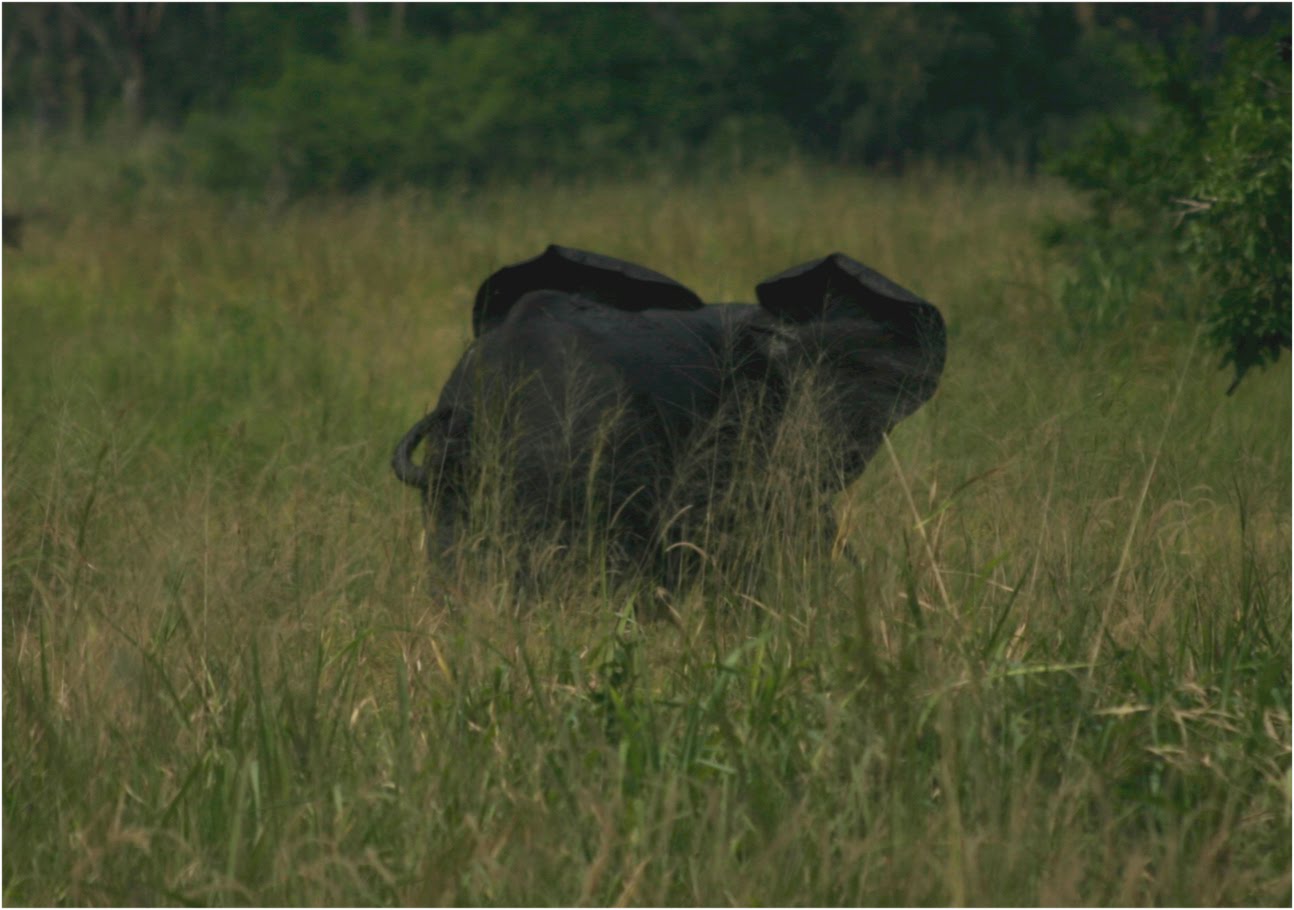
Forest elephant (Loxodonta Africana cyclotis)

The forest elephant is one of the two recognised subspecies of African elephant, the other being the substantially larger savannah type. The forest variety differs in several aspects other than size, noticeably it has more rounded ears and possesses tusks that are more downwards pointing to facilitate movement through the dense vegetation of the forest habitats they frequent.

It is incredible to think that such large creatures can move with ease in an environment that we have difficulty progressing through despite our secateurs. That is until you see evidence of the passage of the forest giants and realise that their bulk enables them to employ a method of movement that centres upon simply barging through the understorey as branches, vines and even small trees yield before them.

Frequently we come across trails of destruction in the forest that suggest the passage of a tank but are coupled with giant unmistakable footprints and piles of dung. The trampled grass and torn branches act to remind us that we are sharing the forest with the elusive elephants, as does the sound of trumpeting that often meets our ears as we move along the trails.

At times it has to be said that the elephants appear to be a little too close for comfort. For example, a few days ago we were startled by the sound of loud trumpeting emanating from the nearby forest as we traipsed through tall grass on the chase of chimpanzees. I asked William, the day’s ranger, where the trumpeting was coming from. “Jogo Jogo trail”, he replied. Moments later I asked where next he planned to take us in our search for the chimpanzees. “Jogo Jogo trail” he responded, apparently with no fear for our safety in light of his previous answer.

We put our trust in the previously-dependable William and headed off in the direction of the trumpeting. However, I have to admit that I was slightly worried when at one point we used a newly trampled elephant trail, complete with steaming dung piles, as a shortcut!

The sound of trumpeting is an exciting addition to the noises of the forest and the lack of recent sightings of the forest elephants despite their occasional proximity has made me realise how lucky I have been to glimpse them at all during my time here.

I love the thought of such giant beasts ambling through the forest and I am amazed by the ease with which the damage they leave behind them suggests they do so. The impressively powerful and fascinating forest elephant is therefore my 9th ‘animal of the week’.

The search for the fabled fall

For some weeks now I have been intrigued by the ‘waterfall’ waypoint marked on my GPS by its previous owner. Having never quite made it to the end of the Mugiri trail and the promised location of the fabled fall I was keen to investigate, and with chimpanzees being sighted near there yesterday afternoon today seemed like a good opportunity to do so.

Upon entering the forest early this morning we set off upon the 8km journey to the waterfall, pausing frequently to check tracks and shaken branches for clues to the chimpanzees’ whereabouts. The walk took us further than I’d previously explored and before long I found myself in an excitingly unfamiliar area of the forest, where the normally gently bubbling river changed into a torrent of tumbling water.

I always love the exploratory feel of my first encountes with previously unvisited portions of the trails, and this part of the forest was particularly beautiful. Additionally, the act of searching for a waterfall known only from a GPS point and the accounts of previous visitors gave the trek a definite air or adventure.

Eventually we were greeted by the incessant pounding of water that signalled our arrival at our destination. In reality there is not one, but two waterfalls at the site - the one further upstream being the more impressive of the two, with a cascade of water around ten metres high carving intricate crevices into the surrounding rocks and leaving them glistening with spray.

Ever eager for the chance to explore I suggested to Eli, our ranger for the day, that we climb up the valley sides to the top of the second fall to see what could be found there. Somewhat unexpectedly Eli agreed and so he and I set off up the steep slopes scrambling over rocks, roots and vines in our quest to discover what lay atop that second waterfall.

It turned out that beyond the second waterfall lay a third fall. This one was smaller but, in my eyes, more beautiful, with the dark red, spray-drenched rocks that framed the falling water glistening in the sun. Once I had insisted on crawling out over a ledge to peer down over the cascading water of the fall we had just climbed up, we naturally decided to find what was upstream of waterfall number three.

Upon reachig the top of that third waterfall it seemed that the time had come for our exploratory foray to come to an end, as we were presented with no falls but merely a new stretch of river. Disappointed to find no more waterfalls to climb, but having thoroughly enjoyed our brief exploration we headed back down to where Duncan and our chapatti-filled lunch box were waiting.

With our bellies filled we headed back downstream. My hopes were briefly raised when a trail of partly eaten fruit suggestive of chimpanzees was found, but unfortunately that trail soon led to a dead end and so we arrived back at camp with no chimpanzee sightings to report, but able to verify the existence of the fabled fall and to announce our discovery of the third waterfall.

Despite the lack of chimpanzees, today has been a great day. Having been here nearly 8 weeks now there are few sections of trail remaining unexplored for me, and so today’s excursion into unfamiliar territory, and the included scrambling search for what lay beyond the known waterfalls, was a brilliant adventure.


Written on Sunday 29th August